Starting a Business in India? 7 Essential Registrations Every Entrepreneur Should Know
Starting a new business in India is an exciting opportunity, but choosing the right business structure and completing the necessary registrations is equally important. Whether you are planning to start a small shop, food business, manufacturing unit, e-commerce business, consultancy, or service-based company, proper registrations can help you operate legally and build credibility.
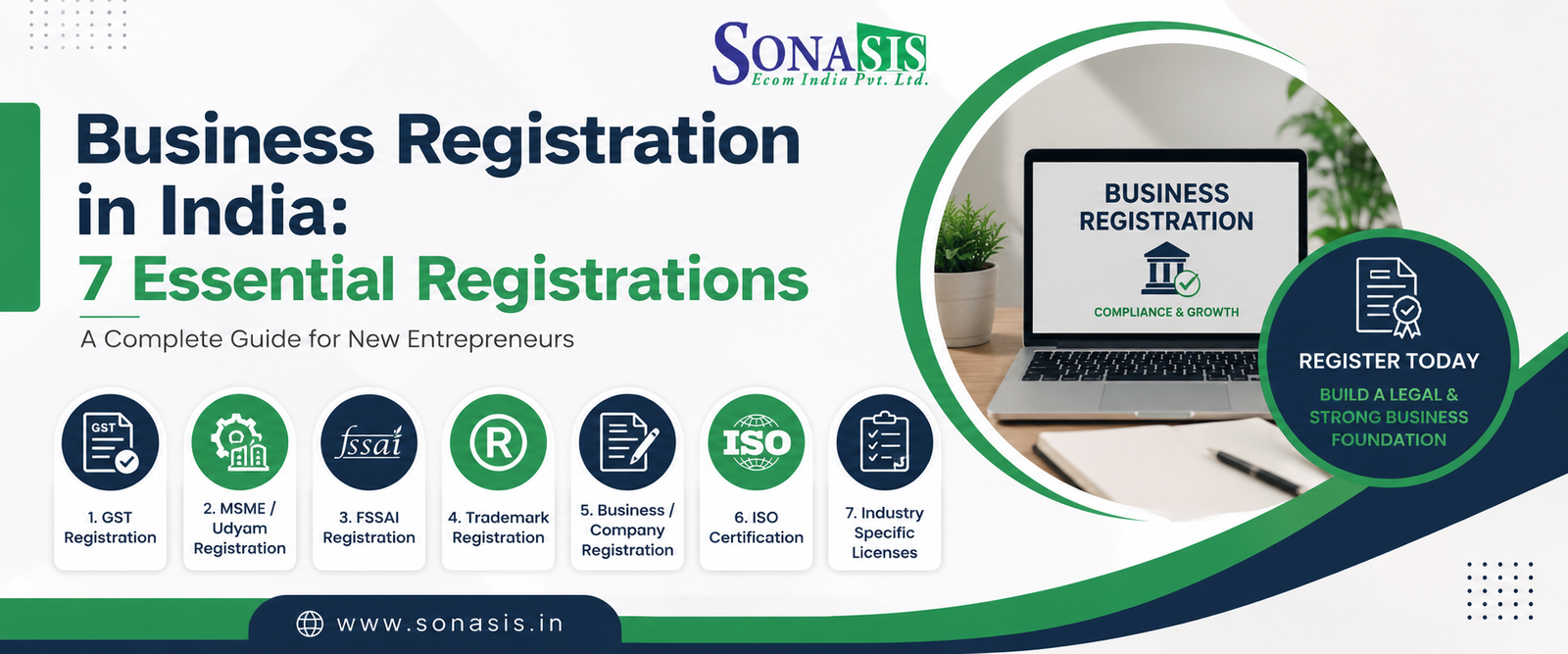
Many entrepreneurs are unsure about which registrations are mandatory and which ones are beneficial for business growth. Here are seven important registrations and certifications that business owners should understand before getting started.
1. GST Registration
Goods and Services Tax (GST) registration is one of the most important registrations for eligible businesses in India. It provides a unique GSTIN and allows businesses to comply with GST-related tax requirements.
GST registration may be particularly relevant for businesses involved in the supply of goods or services, e-commerce activities, and businesses dealing with customers or vendors who require GST invoices.
Before applying, business owners should understand the applicable GST rules and registration requirements for their specific business activity.
2. MSME / Udyam Registration
Micro, Small and Medium Enterprises can consider obtaining MSME Udyam Registration. It provides formal recognition to eligible enterprises and can be useful when accessing certain government schemes, business benefits, and financial opportunities.
The registration process is online, and entrepreneurs should keep their business and identity-related information ready before applying.
For small businesses, startups, manufacturers, traders, and service providers, understanding MSME registration can be an important part of business planning.
3. FSSAI Registration or License
If you are planning to start a food-related business, FSSAI registration or licensing may be required depending on the nature and scale of the business.
Restaurants, food manufacturers, retailers, wholesalers, cloud kitchens, food processors, and other food business operators need to understand the applicable food safety requirements.
FSSAI compliance helps food businesses demonstrate that they are operating under the regulatory framework applicable to food safety in India.
4. Trademark Registration
A business name, logo, tagline, or brand identity can become one of the most valuable assets of a company. Trademark registration can provide legal protection for eligible brand elements.
Entrepreneurs should ideally check the availability of their proposed brand name before investing heavily in packaging, advertising, websites, and marketing.
Trademark registration is particularly important for businesses planning to establish a long-term brand presence.
5. Business Registration
Choosing the appropriate business structure is another important decision. Depending on the business and its objectives, entrepreneurs may consider structures such as:
- Proprietorship
- Partnership Firm
- Limited Liability Partnership (LLP)
- One Person Company (OPC)
- Private Limited Company
Each structure has different compliance requirements, costs, taxation implications, and legal characteristics. Therefore, entrepreneurs should choose a structure based on their business objectives and professional requirements.
6. ISO Certification
For businesses looking to improve their management systems and demonstrate adherence to specific standards, ISO certification can be valuable depending on the industry and applicable standard.
ISO standards can cover areas such as quality management, information security, environmental management, occupational health and safety, and other business processes.
However, ISO certification is not a universal legal requirement for every business. Its relevance depends on the organization’s activities, customers, contracts, and business goals.
7. Industry-Specific Registrations and Licenses
Apart from the registrations mentioned above, certain businesses may require additional licenses or approvals.
For example, businesses involved in food, manufacturing, import-export, medical products, finance, construction, or other regulated sectors may have additional compliance requirements.
Therefore, entrepreneurs should identify the registrations applicable to their specific business before starting operations.
Why Proper Business Registration Matters
Completing the appropriate registrations can help businesses establish a formal identity, maintain regulatory compliance, improve credibility, and prepare for future growth.
It can also make it easier to work with corporate customers, apply for certain business opportunities, maintain proper documentation, and build a professional brand.
However, not every registration is compulsory for every business. The requirements depend on factors such as business activity, turnover, location, type of entity, and applicable laws.
Get Professional Assistance for Business Registrations
Understanding government registrations and compliance requirements can sometimes be confusing, especially for first-time entrepreneurs.
SONASIS provides business registration and compliance assistance for entrepreneurs and businesses, including GST Registration, MSME/Udyam Registration, FSSAI Registration, Trademark Registration, Company Registration, ISO Certification, ITR Filing, and other business-related compliance services.
If you are planning to start or formalize your business, getting the applicable registrations in place can be an important first step toward building a compliant and professional business.
Conclusion
Starting a business involves more than simply choosing a business idea. Proper registration, licensing, taxation, brand protection, and ongoing compliance can play an important role in building a sustainable business.
Before applying for any registration, entrepreneurs should identify the requirements applicable to their particular business activity and seek professional guidance where necessary.
With the right registrations and compliance framework in place, businesses can focus more confidently on growth, customers, and long-term success.