Introduction to Exporting from India
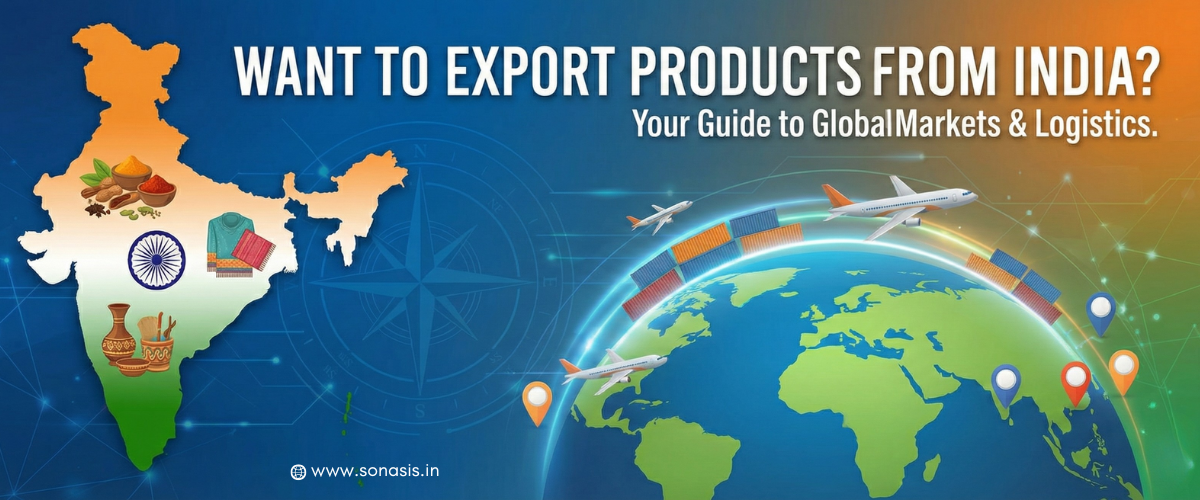
Exporting refers to selling goods or services produced in one country to buyers in another country. India is among the world’s fastest-growing exporting nations, offering products like textiles, spices, pharmaceuticals, handicrafts, machinery, and IT services.
Why Export from India?
Exporting from India offers several advantages:
🌍 Access to global markets
💰 Higher profit margins compared to domestic sales
📈 Government incentives and subsidies
🏭 Utilization of India’s strong manufacturing base
🌐 Increased brand recognition internationally
India’s strategic location, skilled workforce, and competitive production costs make it a preferred sourcing destination worldwide.
Step 1: Decide What Products to Export
Choosing the right product is the foundation of a successful export business.
Popular Export Products from India
Agricultural products (rice, spices, tea, coffee)
Textiles and garments
Handicrafts and home décor
Pharmaceuticals and medical equipment
Engineering goods and auto parts
Leather products and footwear
Tips for Product Selection
Ensure consistent quality and supply
Check export restrictions or bans
Evaluate profit margins after logistics and taxes
Step 2: Conduct Export Market Research
Before exporting, research your target market thoroughly.
Key Factors to Analyze
Demand for your product
Import regulations of the destination country
Local competition and pricing
Cultural preferences and packaging norms
You can use trade data portals, embassies, trade fairs, and B2B platforms to identify potential buyers.
Step 3: Obtain Required Export Licenses & Registrations
To legally export from India, you must complete the following registrations:
1. Import Export Code (IEC)
Issued by the Directorate General of Foreign Trade (DGFT), IEC is mandatory for all exporters.
2. Business Registration
You can export as:
Proprietorship
Partnership firm
LLP
Private Limited Company
3. GST Registration
Required to claim tax refunds and export benefits.
4. RCMC (Registration-cum-Membership Certificate)
Issued by Export Promotion Councils, depending on your product category.
Step 4: Understand Export Documentation
Proper documentation is crucial to avoid delays and penalties.
Essential Export Documents
Commercial Invoice
Packing List
Bill of Lading / Airway Bill
Shipping Bill
Certificate of Origin
Insurance Certificate
Letter of Credit (if applicable)
Accurate documentation ensures smooth customs clearance and payment processing.
Step 5: Pricing, Packaging & Labeling for Exports
Export Pricing
Export pricing must include:
Cost of production
Packaging and labeling
Freight and insurance
Duties and commissions
Desired profit margin
Packaging & Labeling
Follow international packaging standards
Use eco-friendly materials where possible
Include product details, country of origin, and handling instructions
Good packaging reduces damage and enhances buyer trust.
Step 6: Choose the Right Shipping & Logistics Method
Selecting the right logistics option impacts cost and delivery time.
Shipping Modes
Sea Freight: Best for bulk and heavy shipments
Air Freight: Faster but more expensive
Courier Services: Ideal for small samples
Work with reliable freight forwarders and customs brokers for hassle-free shipping.
Step 7: Payment Methods in International Trade
Secure payment methods protect exporters from financial risks.
Common International Payment Methods
Advance Payment
Letter of Credit (LC)
Documents against Payment (DP)
Documents against Acceptance (DA)
Open Account
New exporters should prefer advance payment or LC to minimize risk.
Step 8: Customs Clearance & Shipment
Once goods are ready:
File the shipping bill online
Goods are examined by customs
Duties (if any) are paid
Shipment is cleared and dispatched
Tracking shipments and maintaining communication with buyers is essential at this stage.
Government Incentives & Export Promotion Schemes
The Indian government offers several schemes to encourage exports:
Duty Drawback Scheme
RoDTEP Scheme
Export Promotion Capital Goods (EPCG) Scheme
Market Access Initiative (MAI)
These incentives help exporters improve competitiveness in global markets.
Common Challenges in Exporting from India
Despite opportunities, exporters may face challenges such as:
Complex documentation
Currency fluctuations
Payment delays
Compliance with foreign regulations
Logistics and port delays
Proper planning and professional support can overcome these challenges.
Tips for a Successful Export Business
Start small and scale gradually
Maintain consistent quality
Build long-term buyer relationships
Stay updated with export policies
Use digital marketing to find international buyers
Patience and compliance are key to long-term export success.
FAQs on How to Export Products from India
Q1. Can an individual export from India?
Yes, individuals with IEC and GST registration can export.
Q2. What is the minimum investment required?
Export business can start with as little as ₹50,000, depending on product and market.
Q3. Is export profitable in India?
Yes, with the right product and market strategy, exporting can be highly profitable.
Conclusion
Understanding how to export products from India is the first step toward entering global markets. From selecting the right product and obtaining licenses to managing logistics and receiving payments, each step plays a vital role in export success.
With India’s strong export ecosystem and government support, now is the perfect time to start your export journey. Follow this guide carefully, stay compliant, and build a sustainable international business.
SONASIS ECOM INDIA PVT. LTD. specializes in a comprehensive range of company registration services and compliance solutions tailored to meet the diverse needs of businesses. Our expert team is dedicated to guiding clients through the registration process, ensuring adherence to all regulatory requirements. For personalized assistance and to explore our offerings, please do not hesitate to reach out to us.